


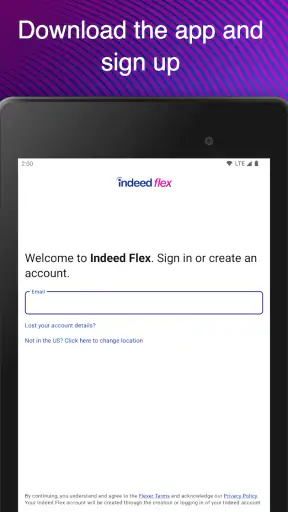
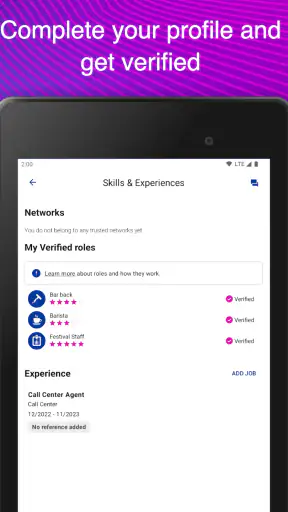
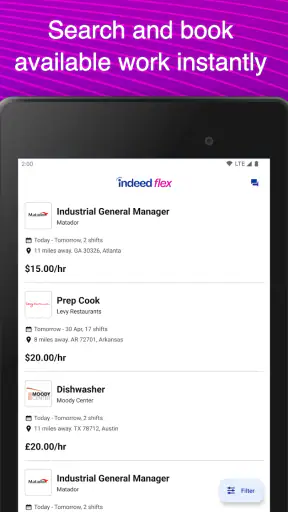
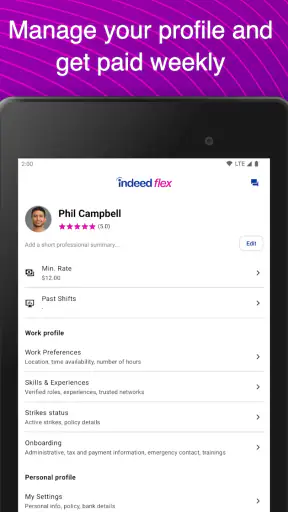
Finding flexible work sounds simple until the process becomes a maze of job boards, messages, applications, and waiting. Indeed Flex takes a more direct approach: it is a free business app from Indeed Flex that brings short-term and flexible job opportunities into a mobile workflow. I found it most useful when I wanted to look for work that could fit around an existing schedule rather than commit immediately to a fixed role.
The important distinction is that this is not just a general job-search app with a long list of permanent vacancies. Its focus is on flexible shifts and getting from browsing to booking with less back-and-forth. That makes it appealing for people who need practical options close to them, while also creating a few expectations that are worth understanding before signing up.
What to expect before you begin
Indeed Flex is aimed at people who want flexible employment opportunities and the ability to act quickly when a suitable shift appears. The developer is Indeed Flex, and the app sits in the Business category. It is free to install, rated for Everyone, and works on devices running Android 8.0 or later. The current release is version 76.33.0 (871), so keeping the app updated is sensible when your work depends on timely information.
The app has built a substantial user base, with over one million installs and an average rating of 4.4 from around 7,800 ratings. Those figures suggest that it is not an experimental service used by only a small group, although they should not be mistaken for a guarantee that every user will find the same amount of work. Availability and suitability naturally depend on where you live, what kind of work you can do, and which shifts are open when you look.
My first piece of advice is to treat it as a tool for active planning, not as an automatic source of income. You still need to check each opportunity carefully, consider travel time, and decide whether the schedule is realistic. The convenience comes from having flexible options in one place; the responsibility for choosing wisely remains with you.
It is especially well suited to people with changing availability, such as students, workers combining several commitments, or anyone looking for extra shifts. It can also help someone returning to work who wants to start with manageable commitments. On the other hand, if you need a permanent full-time position with a predictable long-term schedule, a conventional recruitment site or direct employer application may be a better primary option.
Preparing for the first setup
After installing the app, I would begin with a quiet ten-minute setup rather than rushing through it while travelling. Have your basic work information ready and think about the types of shifts you would genuinely accept. A broad search may look attractive at first, but it can become inefficient if the results include roles, locations, or schedules that do not fit your life.
Be honest about your availability. Flexible work only helps when the shift can actually be completed. If you regularly have classes, childcare, another job, or a long commute, those limits should guide every search. Marking yourself as available for everything may produce more possibilities, but it can also encourage last-minute decisions that leave you stressed or unable to attend.
Location deserves particular attention. A shift that looks nearby on a map may still require awkward public transport or a costly journey at an unusual hour. I recommend checking the route before booking, especially for early starts or late finishes. The real value of an opportunity is not just the work itself; it is the work minus the time, effort, and travel needed to reach it.
It is also worth reading the role details slowly. Look for the workplace, expected timing, type of duties, and any requirements shown in the listing. Do not rely on the job title alone. Two roles with similar names can feel very different once you consider the pace, physical demands, customer contact, or need to work as part of a team.
Getting from installation to a useful first result
Your first meaningful success should not simply be opening a listing. It should be finding one opportunity that fits your availability, travel limits, and comfort level, then understanding what accepting it involves. I found that a focused search is more useful than scrolling endlessly. Start with one kind of work and one realistic area, then widen the search only if the results do not suit you.
When a promising shift appears, pause before selecting it. Compare the start time with the entire journey, not just the moment you need to leave home. Check whether you have enough time to arrive without depending on a connection that is frequently delayed. This small habit prevents one of the most common mistakes in flexible work: accepting something that technically fits the calendar but not real life.
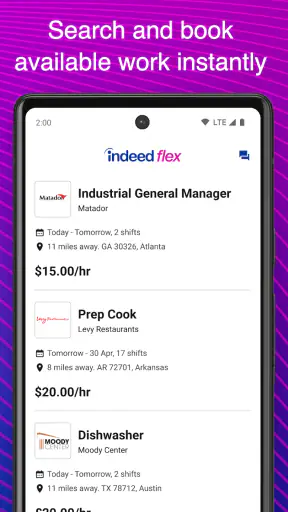
Once you are comfortable with the details, booking a shift is the app’s clearest advantage. The process feels more immediate than sending a traditional application and waiting for a recruiter to respond. That speed is useful when your schedule changes often, but it also means you should not tap through casually. A booked commitment deserves the same seriousness as any other work arrangement.
A realistic example would be someone who has a free weekday after a morning class. Instead of searching for a permanent job that conflicts with the timetable, they can check for a suitable shift, assess the journey, and decide whether the hours leave enough time to get home afterward. The app is most helpful in this kind of situation: a specific opening in the week, a clear limit on travel, and a willingness to work when the opportunity appears.
For a first attempt, I would choose a shift with a comfortable travel buffer rather than the most attractive-looking option. A smooth first experience teaches you how the listings, timing, and commitments fit together. It is better than starting with a complicated journey or an inconvenient schedule and then deciding that the whole service is unreliable.
Where new users can become confused
The word “flexible” can be misunderstood. It does not mean every role can be changed freely after booking, nor does it mean work will always be available at the exact time you want. Flexibility describes the style of opportunity, not a promise that every shift will suit every person. I would approach each listing as a real commitment and read the relevant information before confirming.
Another possible confusion is the difference between discovering work and being ready to perform it. Seeing a listing does not remove the need to consider your own suitability, preparation, or travel arrangements. If a role requires a particular level of experience or involves duties you dislike, the quick booking flow should not push you into accepting it simply because it is available.
New users may also compare the app with a standard job board and wonder why they should not use both. In my view, they serve different purposes. A conventional job board is often better for researching employers, comparing permanent careers, and preparing a detailed application for a long-term position. Indeed Flex is more practical when the immediate question is, “What flexible work can I reasonably take?”
There is a trade-off in that convenience. A traditional application can give you more time to present your background and ask questions before committing. A shift-focused app gives you speed and a clearer short-term action, but you need to do more of your own checking. I prefer Indeed Flex when I already know the kind of work I want and need a manageable opportunity, rather than when I am still exploring an entire career direction.
Do not assume that a high number of installs means the same opportunities will appear in every town. Flexible work is local by nature. If your area has limited listings, repeatedly refreshing the app may not solve the underlying problem. In that case, widening your acceptable travel area, checking at different times, or using a broader employment service alongside it may be more productive.
There is also a practical emotional hurdle: the first booking can feel more serious because the process is quick. My advice is to create a personal checklist before accepting anything. I would confirm the date, start and finish times, location, route, type of duties, and whether I have the clothing or equipment needed. This takes little time and turns an impulsive tap into a considered decision.
Small habits that make the app more useful
One useful habit is to search with two schedules in mind: the hours you would ideally work and the hours you could realistically work in an emergency. Keep those categories separate. If you treat every possible hour as equally convenient, you may book too many difficult shifts. A narrower, honest routine is easier to maintain and gives you a clearer idea of whether the app is genuinely helping.
A second habit is to judge opportunities by total effort rather than headline appeal. Consider transport, preparation, recovery time, and what the shift prevents you from doing afterward. This is particularly important when a short opportunity requires a disproportionately long journey. Flexible work should add useful income or experience without quietly taking over the rest of your day.
A third insight is that speed makes planning more important, not less. Because the app is designed around quick action, I would keep a simple personal record of commitments in my calendar as soon as I book them. That avoids double-booking with other work, appointments, or family responsibilities. It also gives you a single place to check your week instead of relying on memory.
It helps to review your experience after each completed shift. Ask yourself whether the location was practical, whether the duties matched your expectations, and whether the timing worked with your routine. Over time, this creates a personal filter for future choices. You will know which areas are worth considering, which hours leave you exhausted, and which types of work suit you best.
If you are using the app for extra income, avoid building a budget around the assumption that every week will look identical. Flexible opportunities can vary, and responsible planning means treating booked work as confirmed for your own schedule while remaining cautious about future earnings. The app can support a changing work pattern, but it should not be treated like a fixed salary unless your own circumstances make that reliable.
Who should use it and who should choose another route
I would recommend Indeed Flex to someone who values control over when they work and is comfortable making quick but careful decisions. It is a strong match for people who want to fill gaps in a timetable, try different kinds of shift work, or find a route into employment without beginning with a long application process.
It is also useful for someone who prefers a phone-based workflow. The app keeps the search close at hand, which matters when your availability changes during the day. Instead of waiting until you are at a computer, you can check opportunities when planning the week and decide whether a particular shift is practical.
I would be more cautious about recommending it as the only job-search method for someone seeking career progression, a permanent contract, or extensive information about an employer before applying. Those users may be better served by direct company career pages, professional networking platforms, or established recruitment websites that focus on longer-term roles.
It may also be a poor fit if your availability is extremely limited and your travel radius is very small. The more conditions you place on a shift, the fewer listings are likely to match. That is not necessarily a flaw in the app, but it does affect whether the service feels useful in your particular situation.
The age rating of Everyone makes the app broadly accessible from a content perspective, but suitability for work still depends on the requirements of individual opportunities and the user’s own circumstances. A general age label should not be read as a statement that every kind of shift is appropriate for every person.
How it compares with ordinary job searches
Traditional job boards usually ask you to search, read a description, submit an application, and wait. That process makes sense for permanent employment, where both sides may need a detailed assessment. Indeed Flex is more immediate and more focused on filling flexible work needs. Its appeal is the shorter distance between seeing a suitable opening and deciding to take it.
The downside is that immediacy can reduce the time available for reflection. With a conventional application, you naturally stop to prepare a résumé, write responses, and consider whether the role supports your longer-term goals. With a shift-based service, the decision can be made in moments. That is convenient when you know what you want, but risky when you are uncertain.
I would use the two approaches together rather than treating them as rivals. Indeed Flex can help with near-term work and practical experience, while a traditional job search can continue in the background for a stable position. This combination is especially sensible for someone who needs flexibility now but does not want to abandon longer-term plans.
The app’s scale is reassuring for a service in this area: it has over one million installs, and its 4.4 average from around 7,800 ratings indicates generally positive reception. Still, the useful question is not whether it is popular in the abstract. The useful question is whether the types of shifts, locations, and schedules available to you match your needs.
My next-step advice after the first booking
After your first successful booking, do not immediately accept several more shifts just because the process feels easy. Complete one, evaluate the experience, and then decide how much more you can comfortably handle. This gives you a realistic baseline for travel, workload, and recovery time.
Keep your availability current and avoid leaving old assumptions in place. A flexible-work app is only as useful as the information guiding your choices. If your timetable changes, adjust your search habits rather than forcing unsuitable shifts into your week.
I would also keep the app alongside a normal calendar and a backup job-search method. That combination protects you from relying too heavily on a single source of work and makes it easier to see the difference between immediate opportunities and longer-term goals. The best result comes from using flexibility deliberately, not accepting everything quickly.
Indeed Flex is a focused, practical option for people who want to find and book flexible shifts from a mobile device. I like its directness and the way it can turn an empty part of the week into a concrete possibility. Its main limitation is also its defining feature: quick access requires careful judgment from the user. If you check the details, plan the journey, and choose work that genuinely fits your life, it can be a useful companion for short-term employment. If you need a predictable career path or a guaranteed schedule, I would look beyond it and use a more traditional recruitment route as well.


